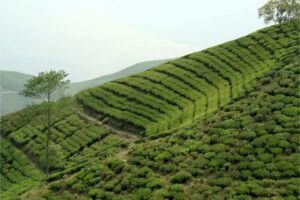
Do you love Japanese culture, architecture and gardens? Why not create a Japanese garden in your outdoor space! The Japanese garden is a style of garden rooted in Japanese culture, designed to be a place for relaxation and meditation. Bamboo, flat stones, water features, trees and shrubs… the Japanese garden has many specific characteristics that it’s important to understand before embarking on such a project. Once complete, your Japanese garden will be the perfect place to recharge your batteries and lose yourself in thought. But how do you go about creating such a space near your home? And how do you decide on the essential elements, plants and trees for a Japanese garden? Sweeek’s tips are here to guide you and give you ideas for successfully creating your dream garden!
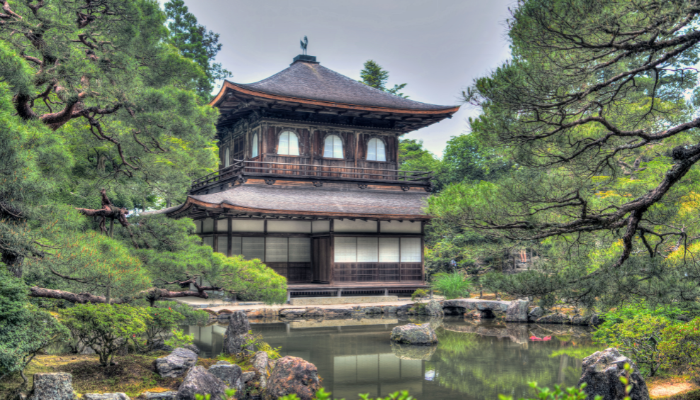
What are the essential elements of a Zen garden?
First of all, it is important to define precisely what is meant by a Japanese garden. This style of garden is a space designed to be timeless, where one can enjoy a stroll whilst meditating and disconnecting from the outside world. Whilst Zen gardens are often found in various Asian temples and in Japanese art, Japanese gardens are designed more for strolling and relaxation. Criss-crossed by gravel paths winding between water features, a Japanese garden will be your haven of serenity where you can recharge your batteries in complete privacy.
It is essential to follow certain rules when designing a Zen or Japanese garden. For example, paths and straight or symmetrical lines must be avoided at all costs: a Japanese garden should be winding, its features should be asymmetrical and always arranged in odd numbers. You should also aim to create shaded areas to preserve the garden’s privacy and tranquillity.
Blur the boundaries of the garden by playing with the placement of different plants, bamboo or wooden panels to create a harmonious space at one with nature. Finally, the presence of water is essential in any form: a pond, a fountain, a small waterfall… When designing your garden, also try to highlight the stones on the ground within your plant beds or near a body of water: stone is a central feature of Japanese gardens!
Maintenance and work in a Zen garden should be kept to an absolute minimum, as a Japanese garden is normally intended to regulate itself. This is why it should not be overloaded with decorative features or plants.
In a Zen garden, you’ll find numerous decorative elements that are essential and integral to the landscape of this type of garden. Lay out gravel paths and walkways so you can stroll amongst the plants. Place Japanese stepping stones along your paths: these are distinctive flat stones that allow you to walk at a leisurely pace and enjoy the greenery around you. Place water features here and there, in various sizes and shapes: ponds, pools, fountains, bodies of water… the possibilities are endless! Water symbolises purity and is highly prized in Japanese gardens.
You can also install small features, such as a small bamboo fountain, in your water features to bring the pond to life and allow you to hear the sound of flowing water. The presence of sand and gravel around the edge of the pond or in other parts of the garden will evoke a Japanese-style décor and lend a Zen feel to the whole space.
As for the décor, it should remain understated and minimalist. There’s no need to clutter the garden with features such as wooden bridges or water features. However, it is very tasteful to place one or two Asian statues amongst the plants, to illuminate a clump of bamboo with a lantern, or to set out a small table and some natural wood chairs at a bend in the path.
Don’t forget rocks and stones either: clusters of rocks look great near a body of water or in the middle of perennial beds. Don’t overdo it; instead, opt for carefully chosen elements that you can place in a strategic spot to significantly enhance your garden.
Which plants should you choose for a Japanese garden?
You now need to set about choosing the plants and greenery that will fill your garden. As for the overall design, it’s best to focus on the colour green and add a few splashes of colour here and there. Once again, keep it simple and don’t plant too many different varieties. Stick to around a dozen species to preserve the garden’s natural look and turn it into a haven of peace.
When it comes to plants, opt for low-growing, perennial varieties to create a carpet of greenery. Among the most popular choices are ferns and mosses, which cover the banks of water features. You can also replace grass with moss or ground-covering bamboo, which will look absolutely stunning. As for flowers, although they are rarely found in Japanese gardens, consider irises, which will add a much-appreciated splash of colour. You might also want to include aquatic plants in your ponds, such as lotus flowers, reeds or water lilies: they will bring the water’s edge to life.
What trees should you plant in a Japanese garden?
Trees also have their place in a Zen garden, and it is important to choose each tree carefully according to its distinctive style. For example, it may be worth planting a Japanese cherry tree, which, come spring, will blossom in a dazzling shade of pink and add colour to your entire garden. Conversely, for autumn, plant a Japanese maple: a magnificent tree whose foliage will turn orange-red as winter approaches. You should also plant pines: these have the advantage of adding another shade of green to the garden and, thanks to their size, lend volume to the landscape during the winter months. Finally, a weeping willow will look lovely near a pond or pool.
As for shrubs, there are several varieties you can plant in the ground to add texture and colour to your garden. These include rhododendrons, camellias, holly and magnolias… plant them individually so that the eye is drawn to this splash of colour, which will stand out against the landscape. And what would a Japanese garden be without bamboo? With its evergreen foliage, it offers many shades of green and makes an excellent privacy screen when planted in clumps, or as ground cover as an alternative to a lawn. However, bamboo does require regular maintenance, as it has an unfortunate tendency to spread uncontrollably.
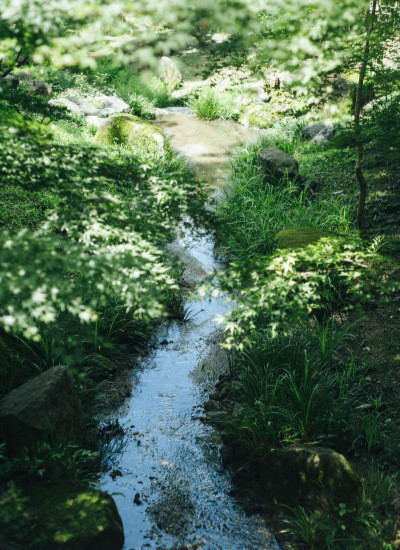
How do you create an indoor Japanese garden?
To create a Japanese garden inside your home, you need to follow the same principles as for an outdoor garden – though without the large trees, of course. An indoor garden is a miniature space where every decorative element must be arranged in the best possible way to create a sense of harmony that invites meditation and calm.
For example, you could create a gravel path around a small pond and place some sand or soil in a corner of the room, raking it into circular patterns to create a Zen-like atmosphere. Plant some bamboo and one or two shrubs to add a splash of colour to the overall look. For a more natural feel, scatter some moss or plants in various spots around the garden. As for decorative elements, place a lantern or a statue of the sort found in Japanese gardens, along with one or two armchairs where you can relax in this soothing atmosphere.
This article on Japanese gardens is now drawing to a close, and we hope it has given you plenty of tips and ideas for designing your outdoor space to suit your tastes and preferences!