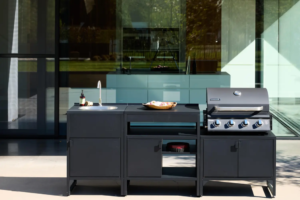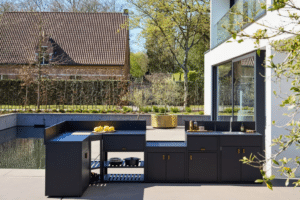
Installing an outdoor kitchen transforms your garden or patio into a proper living space. But even before you choose your appliances and start thinking about the layout of your kitchen, there’s one key question to ask: where should you put it? A good location makes all the difference between a pleasant kitchen… and an impractical space that ends up being used very little. Here are all the essential criteria for choosing the right location for your outdoor kitchen.
Why is it so important to choose the right spot?
The location of an outdoor kitchen determines:
- how easy it is to use on a daily basis
- its weather resistance
- the comfort of your guests
- and even the security of your installation
Prioritise proximity to the house
This is the first thing you should do (and clearly the most strategic move). Installing your outdoor kitchen right next to your house allows you to:
- cut down on trips back and forth (no more 10 trips with the plates)
- facilitate connections (water, electricity, gas)
- improve your everyday comfort
Experts consistently recommend a nearby location to optimise usage and technical installations.
Take the wind (and fumes) into account
An outdoor kitchen in the wrong spot can quickly become… smoky.
It is essential to:
- avoid areas exposed to prevailing winds
- position the cooking area so that the smoke doesn’t blow back towards you (or towards the house)
Poor layout can inconvenience your guests and make the kitchen unpleasant to use.
Ideally, a semi-sheltered spot.
Choose a partially shaded area
Cooking in the blazing sun in August? Not a good idea.
Go for:
- a naturally shaded area
- or easily fitted with a pergola or shelter
This improves thermal comfort and protects your equipment over time.
Bonus: your drinks parties will last much longer!
Check the soil type
Your outdoor kitchen must be built on a stable and secure foundation.
Recommended:
- an existing terrace
- a concrete slab
- a perfectly level ground
Unstable ground can compromise the safety and durability of your installation.
Anticipate connections (water, electricity, etc.)
Depending on your project (a simple barbecue or a full kitchen), you will need:
- water (sink)
- electricity (fridge, lighting, etc.)
- gas
Installing your kitchen near existing utilities greatly simplifies the project and reduces costs. If you’re planning a fully equipped outdoor kitchen, this is non-negotiable.
Think about traffic and space
A successful outdoor kitchen is more than just a neat arrangement of furniture.
You will need:
- enough space to move around
- a logical workflow (preparation / cooking / washing up)
- a nearby dining area
Good traffic flow is essential for comfort and a pleasant atmosphere.
Showcasing the view and the surroundings
If you’re going to cook outdoors, you might as well take advantage of the scenery.
Choose a location that:
- looks out onto the garden
- blends seamlessly into your outdoor space
- creates a friendly atmosphere
The aim: to transform your outdoor kitchen into a real living space.
Protecting your outdoor kitchen
One final point (which is often overlooked): protection. Even if your equipment is designed for outdoor use, it will last much longer if you:
- put up a pergola or a shelter
- avoid areas that are too exposed (rain, wind, direct sunlight)
Appropriate protection and proper maintenance of your kitchen will help to extend the life span of your kitchen.
Modular outdoor kitchen: a flexible solution
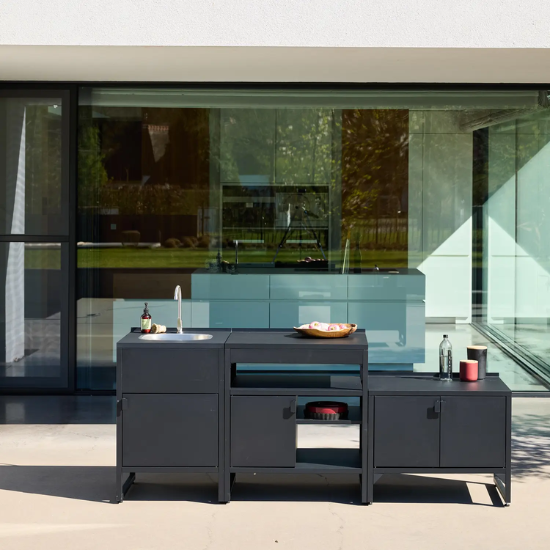
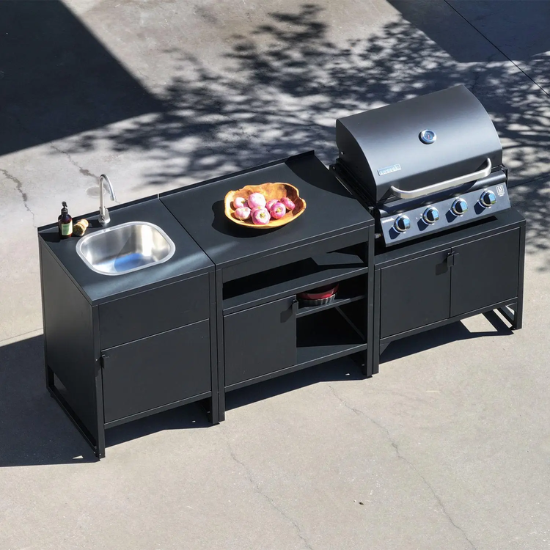
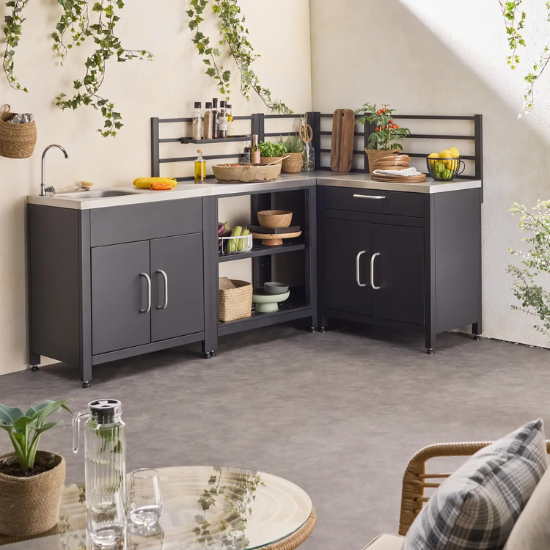
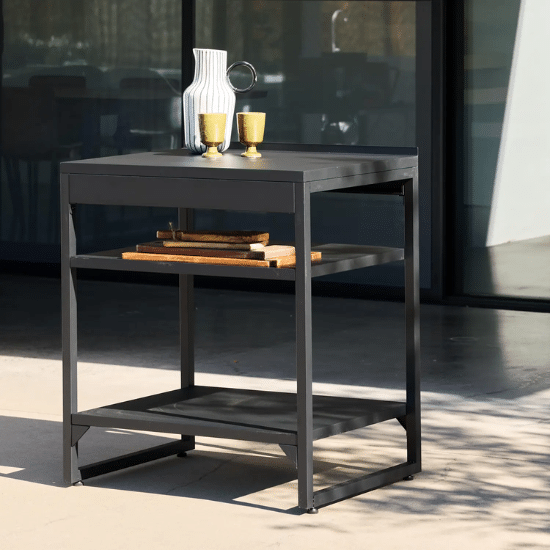
If you’re not sure where the best place to set it up is, modular outdoor kitchens (such as those sold by sweeek) are an excellent option.
They allow you to:
- tailor your setup to your space
- upgrade your system over time
- make the most of every square metre
This is perfect for patios, small gardens or projects that evolve over time.
In short: the right location ticks all the boxes
Before finalising your location, ask yourself these 5 questions:
✔ Is it near the house?
✔ Is it sheltered from the wind and sun?
✔ Is the ground stable?
✔ Are the connection points close?
✔ Is the space pleasant and welcoming?
If you tick all the boxes: you’re on the right track.