Designing an outdoor kitchen means transforming your garden or terrace into a proper living space. Welcoming, practical and stylish, it allows you to make the most of sunny days whilst cooking without any constraints. But to ensure it is as enjoyable as it is practical, there are a few rules to follow. Location, equipment, layout, maintenance… here’s everything you need to know to design an outdoor kitchen tailored to your needs.
Choosing the right spot
Even before you start thinking about the equipment, choosing the right spot is key. Ideally, you should set up your outdoor kitchen close to the house, to make it easier to pop back and forth (and avoid having to carry plates all the way across the garden). You should also make sure it’s sheltered from the prevailing wind and choose a spot that’s partly shaded for greater comfort in summer. Finally, make sure the ground is stable and suitable: a concrete slab or an existing patio is often recommended to ensure the safety and durability of your installation.
Identifying your needs and equipment
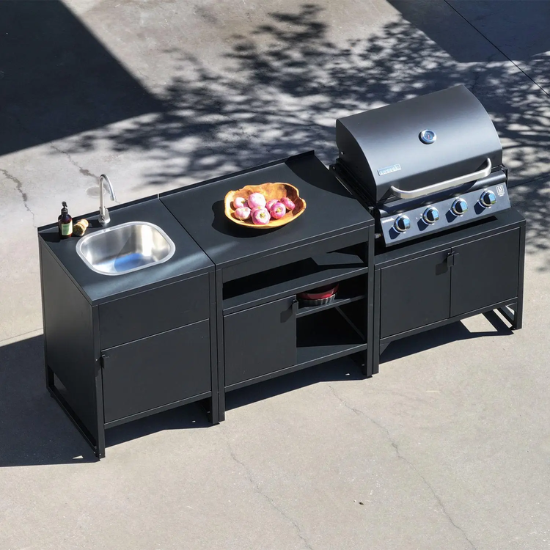
When designing an outdoor kitchen, the most important thing to consider is how you intend to use it. For a simple setup, a barbecue or a plancha may be all you need. If you enjoy entertaining or cooking outdoors regularly, you might want to consider:
- a worktop
- storage space
- a sink
- or even an outdoor fridge
The aim is to recreate a functional space, just like indoors, without cluttering it up with unnecessary equipment.
Think about the layout of the space
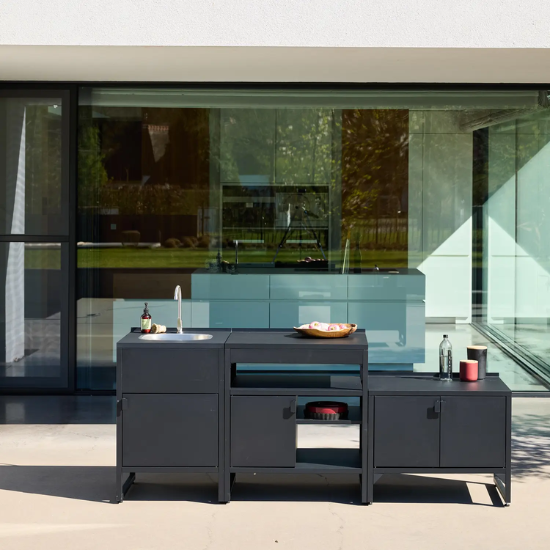
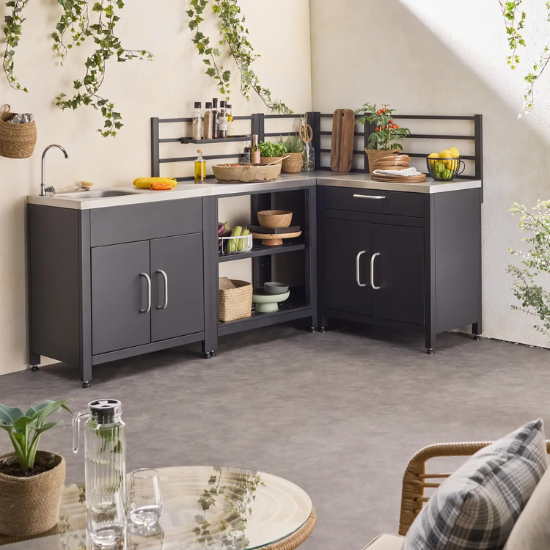
A well-designed outdoor kitchen is, above all, practical. Organise your space into areas:
- preparation
- cooking
- washing (if possible)
- Serving
Make sure there is a smooth flow between these different areas. You could also add a dining area nearby to enhance the convivial atmosphere. When it comes to materials, opt for weather-resistant surfaces such as stainless steel, stone or certain types of treated wood.
Planning for connections
Depending on the equipment configuration selected, certain connections may be required:
- water supply
- drainage
- electricity
- gas
It is advisable to take these factors into account right from the start of the project, or even to consult a professional to ensure that the installation is safe and compliant.
Protecting your outdoor kitchen
To extend the lifespan of your system, protection is essential. You can choose from:
- a pergola or a shed
- a protective cover for the equipment
- materials suitable for outdoor use
Winterising and maintaining your kitchen are important steps: cleaning, protecting and, if necessary, bringing certain items indoors helps to prevent premature wear and tear.
Paying attention to the décor
Finally, aesthetics shouldn’t be overlooked. Add a few decorative touches to make your outdoor kitchen a pleasant place to spend time:
- mood lighting
- plants
- matching furniture
- practical and stylish accessories
The aim: to create a space where people enjoy cooking just as much as sharing a meal.
Designing an outdoor kitchen takes a bit of thought, but the result is well worth the effort. By choosing the right location, suitable equipment and a practical layout, you can create a welcoming space that extends your home into the outdoors.
A real place to live, to be enjoyed from the very first rays of sunshine… and long after.