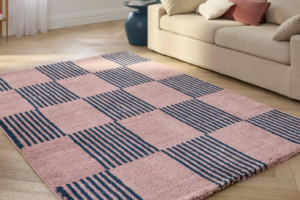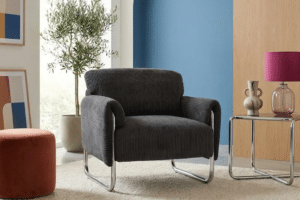
In a nutshell: the glossy trend involves incorporating shiny finishes (lacquer, varnish, glass, mirror, polished metal) into your interior décor, on furniture and accessories. It captures and reflects light, adds depth to rooms and brings a contemporary touch. The simplest pieces to incorporate this trend are: a glossy coffee table, a glossy side table or a glossy mirror.
What is the ‘glossy’ trend in interior design?
The term ‘glossy’ refers to a smooth, reflective surface finish. In interior design, it is used to describe lacquered or varnished furniture, glass tabletops, glossy mirror frames or glazed ceramic accessories.
Unlike a matt finish, which absorbs light, a glossy surface reflects it. The result is that the room appears brighter, the spaces seem more airy and the colours appear more vivid.
Why glossy finishes are so popular in interior design
There are several reasons behind this craze:
- It plays with light. A glossy piece of furniture reflects both natural and artificial light, which is a real asset in rooms with little natural light.
- It adds contrast. When combined with natural or matt materials (wood, linen, terry cloth, concrete), a glossy finish creates a sense of depth and prevents interiors from looking too uniform.
- It brings a modern feel with ease. Often, just one bright piece is enough to give a living room a fresh new look.
- It suits a wide range of styles. Contemporary, minimalist, retro, Art Deco or eclectic: glossy fits in anywhere, provided you use it in moderation.
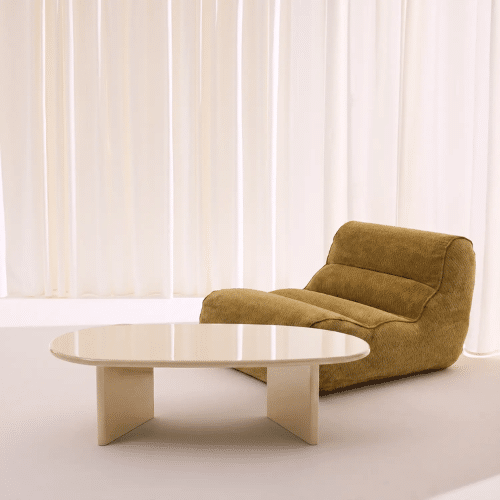
The glossy coffee table: the centrepiece of the living room
The coffee table is the focal point of the living room, and therefore the ideal place to try out the high-gloss finish.
Why choose the glossy finish?
- It catches the eye without taking up any more space than a standard model.
- Its reflection lends a sense of lightness to a compact living room.
- It creates a striking contrast with a textured fabric sofa or a thick rug.
Our style tips:
- On a textured rug, the table’s shine stands out even more.
- Keep the number of items placed on it to a minimum (a book, a candle, a plant) so that the surface is visible.
- Choose a colour that complements an element in the room: cushions, curtains or a picture on the wall.
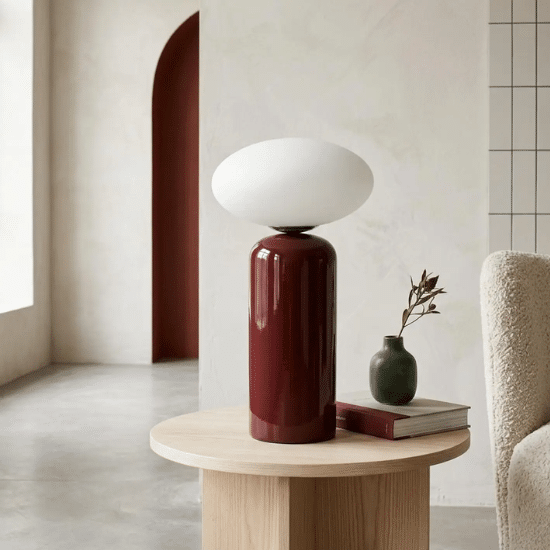
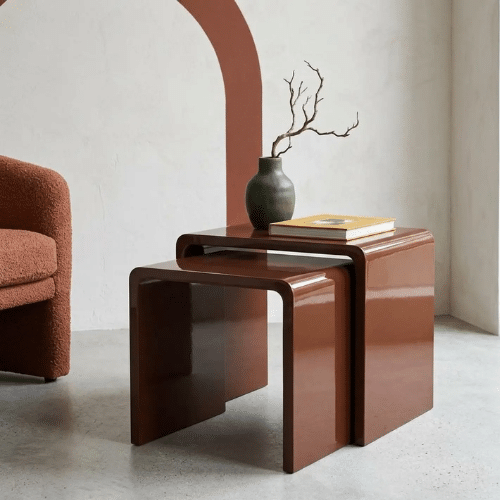
The glossy side table: the little detail that makes all the difference
A side table, which is a bit more understated, is the simplest way to add a touch of gloss without having to completely rethink the whole look.
Where should it be placed?
- Next to the sofa or an armchair, for placing a cup, a book or a lamp.
- Next to the bed, as an unconventional bedside table.
- In the hall, as a welcoming feature with a plant or a catch-all tray.
Good to know: several small side tables of different sizes or heights create a dynamic overall effect, provided you stick to a consistent finish.
The glossy mirror: light and depth
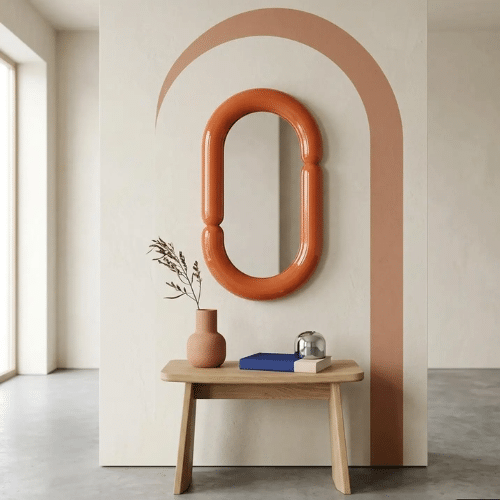
By its very nature, a mirror is an object that plays with light. In a glossy finish, its frame or shiny details enhance this effect.
Our tips for use:
- Facing a window, to increase the amount of natural light in the room.
- In the hallway, to make a narrow space appear larger.
- Above a console table or a chest of drawers, to create a decorative display.
- Paired with a glossy table, to create a harmonious play of reflections.
How can you add a glossy finish without going over the top?
The key lies in one word: balance.
- Go for one or two glossy items per room. Any more than that, and the glossy effect can become overwhelming.
- Vary the finishes. Combine glossy surfaces with matt, warm materials: wood, textiles and unglazed ceramics.
- Keep the colour scheme consistent. Two or three main colours are enough to ensure the glossy finish remains elegant.
- Bear lighting in mind. Soft, indirect light enhances glossy surfaces without causing glare.
- Place the glossy pieces where the light falls. Facing a window or near a light source, they really come into their own.
How do you keep a glossy piece of furniture looking its best?
A glossy surface shows marks more clearly, but it is still easy to look after:
- Use a slightly damp microfibre cloth, then wipe with a second dry cloth.
- Avoid abrasive products, scouring pads and solvents, as these can dull the finish.
- Dust regularly: dust shows up more quickly on a shiny surface.
- Use coasters and trivets to protect the surface.
Always follow the care instructions specific to each product.
Frequently asked questions about the glossy trend
What is glossy furniture?
A glossy furniture piece is one whose surface has a shiny, reflective finish, achieved through lacquering, varnishing or the use of smooth materials such as glass.
Is the glossy look suitable for small spaces?
Yes. Glossy surfaces reflect light and create a sense of lightness, which helps to make a small room appear larger.
What is the difference between a glossy piece of furniture and a lacquered piece?
The term ‘glossy’ describes the shiny appearance of the finish, whilst ‘lacquer’ refers to a surface treatment technique. A lacquered piece of furniture can be glossy, satin-finished or even matt.
What interior design styles go well with glossy finishes?
Glossy finishes work well with contemporary, minimalist, retro, Art Deco or eclectic styles, particularly when paired with natural or matt materials.
How much glossy furniture should there be in a room?
One or two pieces are usually enough to create a focal point without cluttering up the space.
How can you prevent smudges on glossy furniture?
Wipe the surface regularly with a clean microfibre cloth, avoid abrasive products and wipe up any splashes straight away.
In summary
The glossy trend is a simple and effective way to modernise your home: a coffee table, a side table or a glossy mirror is all it takes to bring light, depth and character to a room. The secret lies in striking the right balance between finishes and combining them with softer materials.
At sweeek, we’ve put together a selection of coffee tables, side tables and glossy mirrors to help you embrace the trend at your own pace.