
Having an outdoor kitchen is a bit like inviting summer to stay with you all year round. Impromptu barbecues, aperitifs that go on and on, al fresco dining… it’s a dream. But between perfectly cooked barbecues, there’s a slightly less glamorous reality: cleaning. Grease, dust, bad weather, pollen… your outdoor kitchen has to put up with all sorts. And if you want it to stay looking good (and working properly), proper maintenance is essential.
Here is a simple, effective guide to keeping your outdoor kitchen spotless all year round.
Start by sorting everything out before cleaning
Before you even pick up the sponge, start by clearing your outdoor kitchen completely. Remove all utensils, grills, accessories, gas bottles (if you have any), and anything else lying around in the cupboards.
The aim is simple: to clean an empty surface so as to be thorough and avoid causing any damage.
A quick tip: why not use this opportunity to have a clear-out? If you come across some barbecue tongs that have been mysteriously stuck together since last summer… it might be time to say goodbye to them.
Cleaning surfaces: worktops, stainless steel and furniture
Surface areas are the first to be affected by splashes and food residues.
- For stainless steel: use a soft sponge with warm water and black soap or a mild washing-up liquid. Always dry with a microfibre cloth to avoid streaks.
- For wood: use a mild soap and avoid using too much water. Wood doesn’t like to be soaked.
- For stone or ceramic worktops: a mixture of water and white vinegar works very well for removing grease.
Avoid abrasive products, as they may scratch or damage the materials.
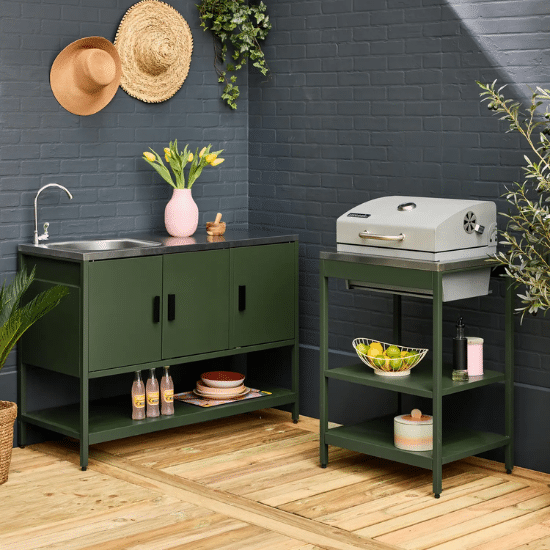

Cleaning the barbecue, plancha or griddle
It’s often the part people dread the most… but it’s also the most important.
For a plancha or a barbecue:
- Gently heat the device (if possible) to soften the fat.
- Scrape off any residue with a suitable spatula.
- Clean with warm water and washing-up liquid.
- For stubborn grease, bicarbonate of soda is your best friend.
Tip: the more regularly you clean, the less you’ll have to tackle a “major cleaning job”.
Cupboards and storage: often overlooked
We rarely think about it, but storage spaces can accumulate dust, damp and sometimes insects.
- Empty the cupboards completely
- Wipe with a damp cloth and a little white vinegar
- Make sure they are completely dry before putting your accessories back in place.
If your kitchen is exposed to the elements all year round, do remember to check that it is watertight and that the seals are in good condition.
The grounds and surrounding area
A clean outdoor kitchen isn’t just about the furniture. The floor also plays an important role.
First, sweep to remove leaves, dust and dirt. Then, use a water hose or a low-pressure cleaner if the surface allows it.
Please note: avoid using a jet that is too powerful, as this could damage the materials or dislodge the seals.
Protect after cleaning (the real secret)
Cleaning is good. Protecting is even better.
- Use protective covers for your equipment
- Apply a protective oil to the wood once or twice a year
- Check screws, hinges and frames regularly
And above all: cover your outdoor kitchen when you’re not using it for a while. Yes, even if it’s “built to last”. The weather loves to test its limits.

How often should you clean your outdoor kitchen?
It all depends on how you use it:
- After each use: give the surfaces and the barbecue a quick clean
- Every month: a more thorough clean
- Twice a year: thorough clean + general check-up
Cleaning your outdoor kitchen is no trouble at all… provided you do it regularly. A bit of soap, some white vinegar, a few good habits, and above all a touch of diligence are all it takes to extend its lifespan and keep the space looking inviting.