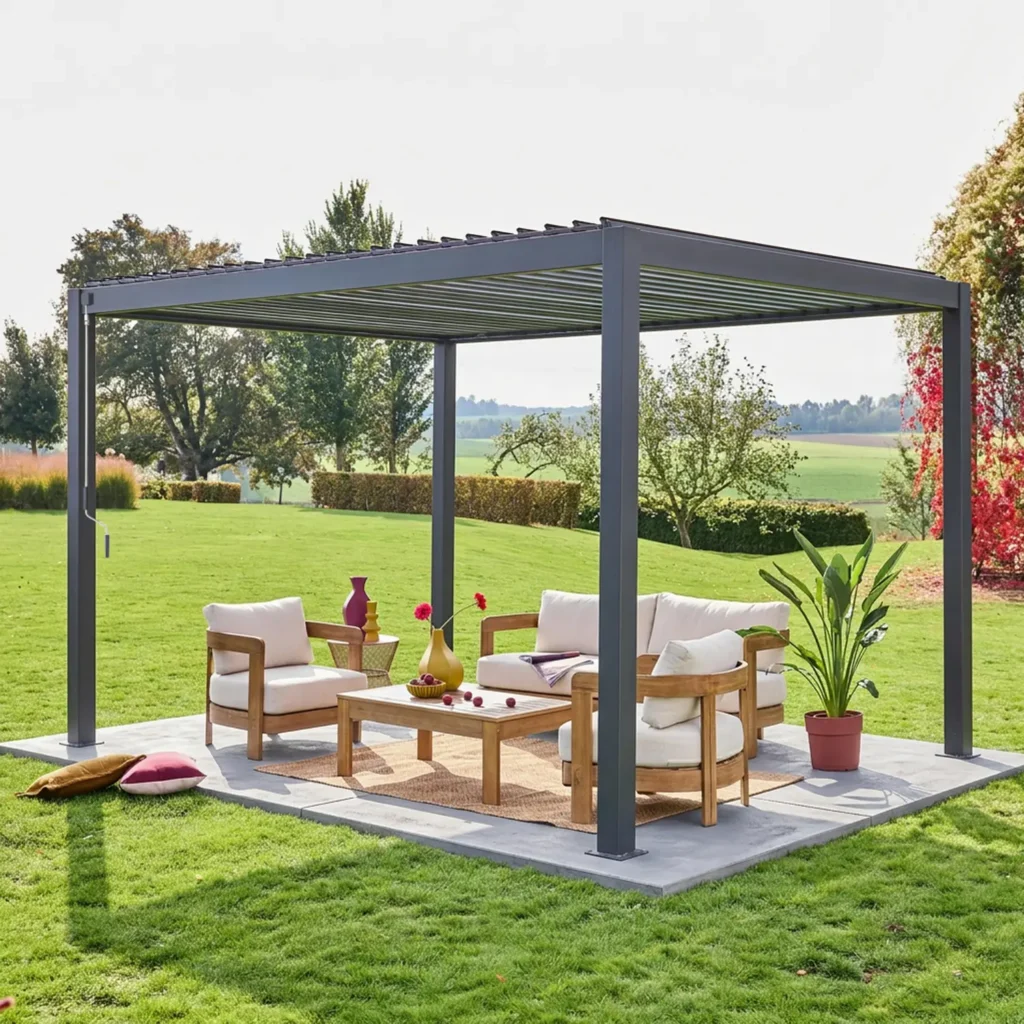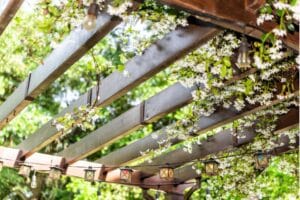
Gazebos and pergolas are ideal for protecting yourself from the sun on sunny days and enhancing your outdoor space. For example, you can place them over your garden furniture or sun loungers to provide shade, just like with a conservatory. A wall-mounted pergola is a structure with two legs that is attached to a house, while an gazebo has four legs and can be placed anywhere in a garden or on a terrace. Both can be made from different materials: aluminium, PVC, wood, steel. To help you choose your gazebo or pergola, we have listed below the factors to consider before making your choice, if you need advice. Material, roof, transportability and structure will be key factors in your decision.
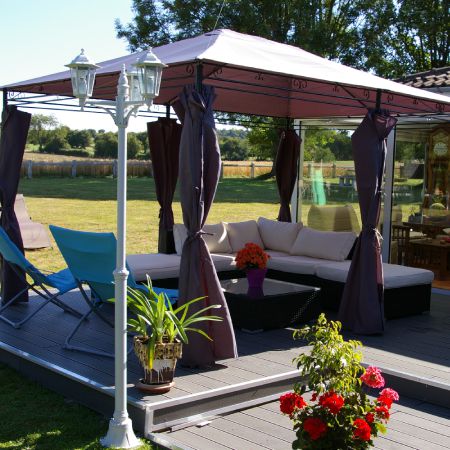
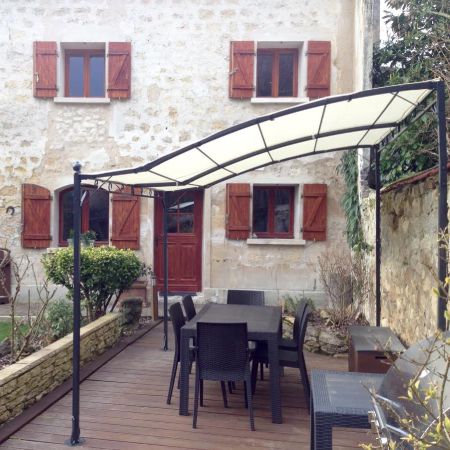
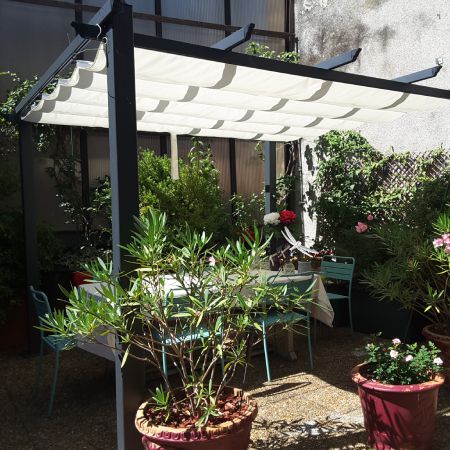
Pergola or gazebo?
First of all, you need to decide whether you prefer a gazebo or a pergola for your patio or garden. The two solutions do not serve exactly the same purpose. It depends on your goal: if you want your structure to have a long lifespan, pergolas are a better option. A pergola (whether made of aluminium, steel, wood or other materials) is very similar to a conservatory, as it is often attached to a house. Pergolas are therefore often open and can be louvered.
On the other hand, if it is only for an event or for the summer, gazebos are a more suitable option as they are easier to set up and move around, since gazebos are often foldable. They are often made of lighter materials than pergolas. You may also hear the term ‘free-standing pergola’ used to refer to an gazebo, or ‘attached gazebo’ or ‘wall-mounted gazebo’ to refer to a pergola. Once you know which structure you prefer, it is important to consider the material (aluminium, steel or other metal), the colour of the roof (white and anthracite being the most neutral colours for fabric) and whether it is easy to transport. Gazebos come in several sizes: the most common are 4×3 and 3×3 gazebos.
How do I choose the material for my gazebo or pergola?
- Wood: Wooden pergolas and gazebos are easy to maintain, sturdy and more affordable. While some woods, such as teak, are highly resistant to moisture, others are susceptible to rot and their colour will change over time if left untreated. A wooden pergola will add natural or rustic charm to your patio or garden.
- Aluminium: Aluminium is a very lightweight material, which is practical for a gazebo as it makes it easy to transport. You can move it around easily if, for example, you want to rearrange your garden furniture. Aluminium does not rust and is therefore resistant to rain, which is also useful for a pergola that will remain in place for years. An aluminium pergola will give your home a modern look, but it comes at a high price both at the time of purchase and over time. Over time, aluminium will fade, and if you want to have it repainted, you will need to hire a professional.
- Wrought iron: depending on the model, this type of gazebo or pergola can exude both traditional and modern charm. If you want your structure to last a long time, wrought iron is ideal as it is very sturdy. However, it can be more or less expensive, depending on the model. If you want your structure to be sturdy, it is best to go through a blacksmith, but this will come at a high price. Otherwise, you can opt for a wrought iron kit, but it will be less resistant. It is also important to know that this type of construction rusts, unlike aluminium, and therefore requires regular maintenance: it needs to be repainted, greased or polished.
- Woven resin: Like aluminium, this material is lightweight and ideal for a gazebo that you can move around. Once again, ease of transport is an important factor to consider. However, even though woven resin is weather-resistant and easy to maintain, it tarnishes over time and cannot be refurbished.
- PVC: economical and maintenance-free, PVC pergolas are very lightweight and can be assembled by yourself. However, they have a very short lifespan (only a few years), come in a limited range of colours, and have a very basic design.
What type of roof should you choose?
Not all pergolas and gazebos have the same roofing. To make the right choice of roofing, you need to consider your budget, the protection offered by the roofing and the colour.
- Canvas roof: this is the lightest and most versatile type of roof. You can choose to use the entire canvas if the sun is strong, or just part of it if there is not much sun. What’s more, the canvas provides protection from the rain thanks to its waterproofing. However, it requires regular maintenance as the fabric deteriorates and must therefore be dismantled every winter. It’s also important to note that canvas provides less protection from the heat than a louvered gazebo or pergola, for example.
- Louvered roof: also known as a retractable slatted gazebo or pergola, the louvered pergola is a very practical roofing solution in both winter and summer. It provides protection from the elements and the sun, while allowing wind and sunlight to pass through when you want it to by changing the position of the slats. However, this does affect the price! This structure is quite expensive.
- Polycarbonate roof: this plastic material allows light to pass through while protecting you from the rain, and at a low price. Your garden furniture will be sheltered all year round! You also have the option of treating the polycarbonate to protect it from UV rays. However, rain can be noisy on a polycarbonate roof.
- Green roof: another option is to choose a pergola with a green roof. It is very attractive, economical, long-lasting and requires no maintenance! You can choose from a wide range of plants that grow at different speeds, with or without flowers, fragrant, evergreen, etc. However, be careful with flowering or fruiting plants that attract bees, as they may not be the best choice for a pergola or gazebo if you regularly eat underneath it. Also, it is not completely waterproof, so you will not be completely sheltered from the rain. Furthermore, this installation does not really let light through, except in winter if the foliage is not evergreen.
When choosing a pergola or gazebo, you should mainly consider the material (aluminium, steel, wood, PVC or wrought iron), the type of roof and the type of structure you want. All this depends on how you intend to use it, whether you want it to be easy to transport, how much you are willing to spend and the style you want for your garden or terrace. And don’t forget to find out about the regulations governing the installation of a pergola. There is a wide range to choose from, with or without curtains, to protect your garden furniture from the sun and bad weather!
sweeek’s selection
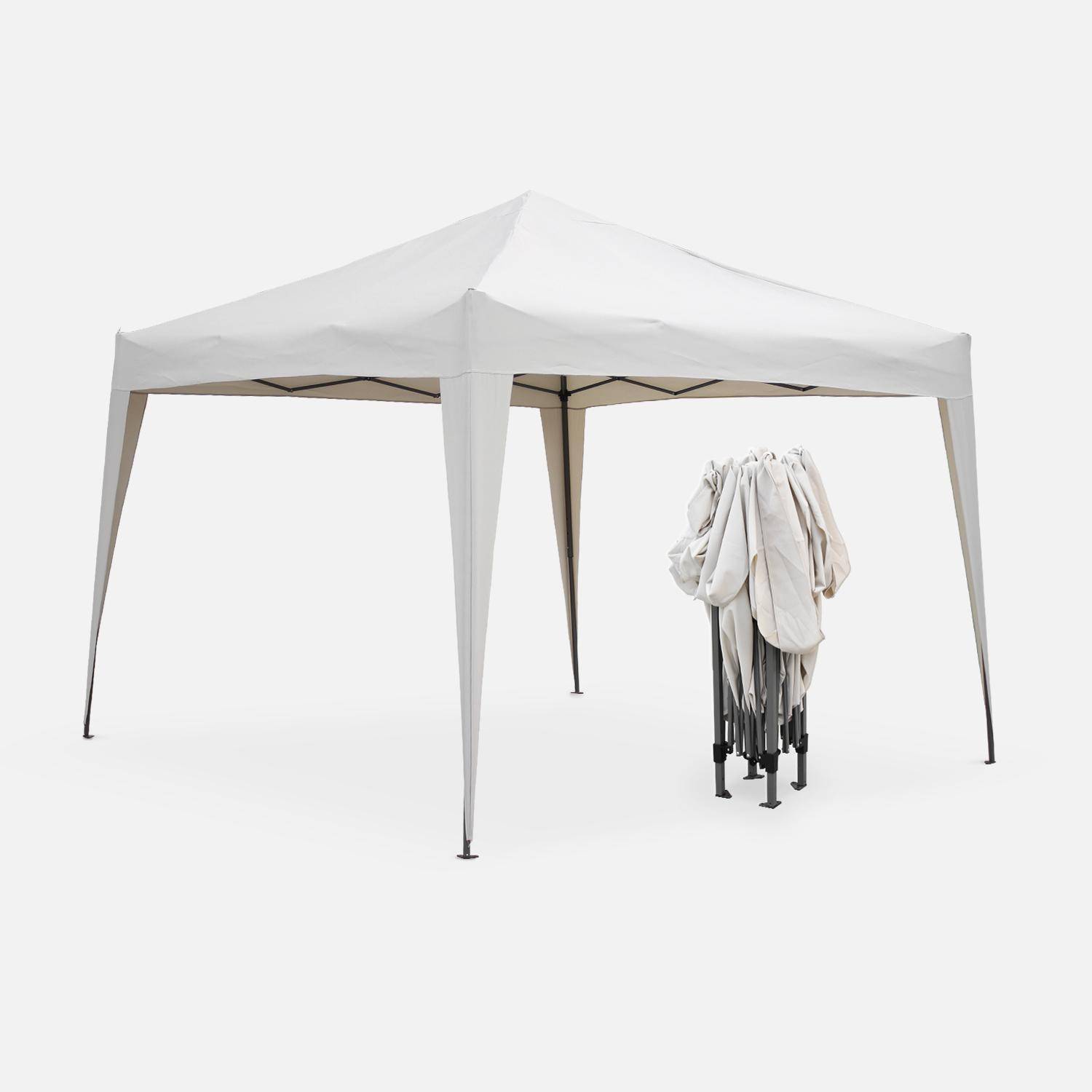
3x3m folding gazebo
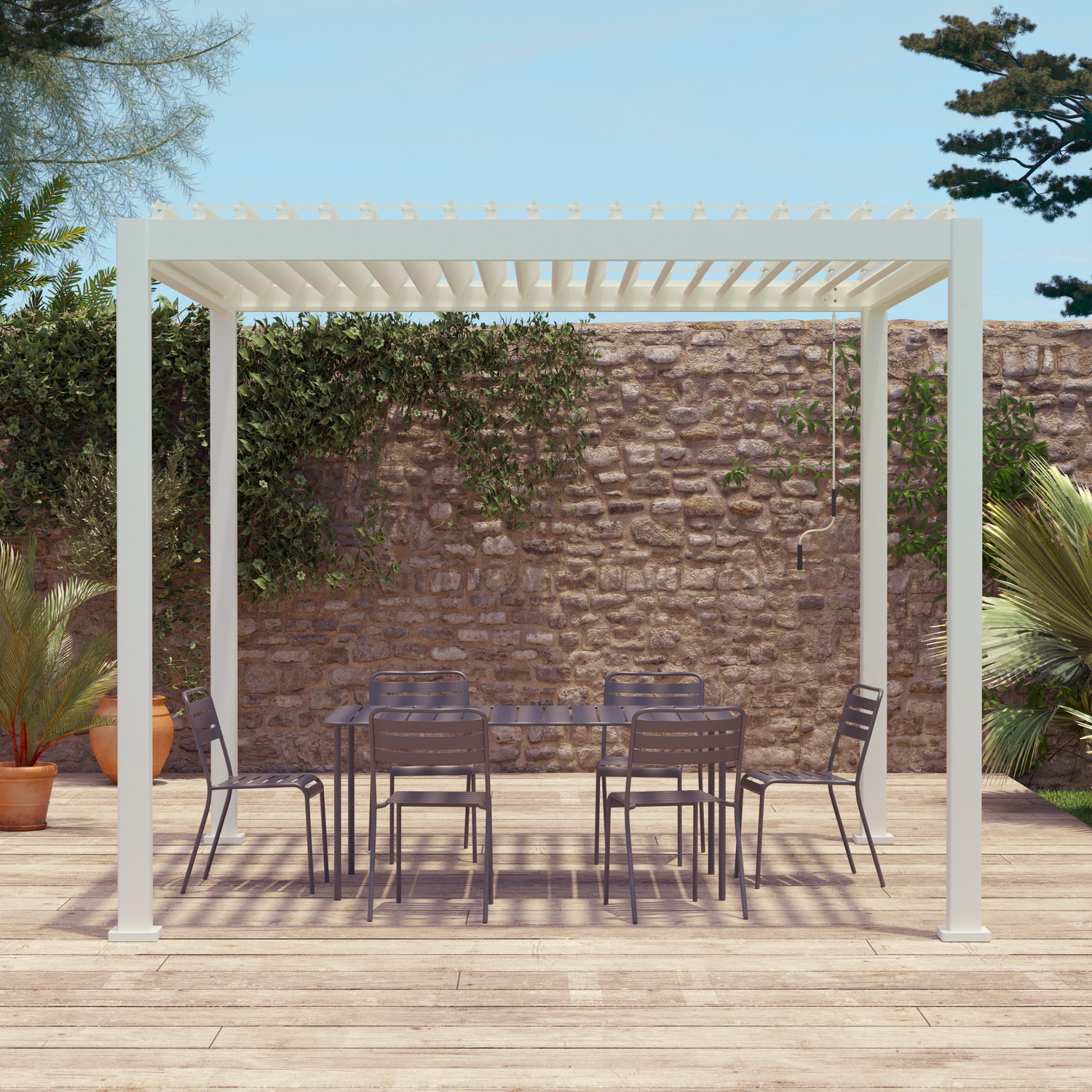
Louvered pergola aluminium 3 x 3m